The first snow never arrives on the ground. It arrives on the mountains.
One October morning you open your eyes, and there is no ceiling to stop them, only glass and sky, and the ridge behind the lodge has turned white overnight. Below it, the tundra is still the colour of rust and honey. The air smells of cold stone and wet moss. A little way off, Seljalandsfoss keeps falling as it has all summer, only louder now, swollen by autumn rain.
This is Iceland in October and November. The summer crowds have gone home. The light has turned low and golden, the nights have grown long enough for the aurora, and the whole landscape has settled into its most cinematic palette. For travellers who come to feel something rather than to tick everything off, it may be the most beautiful moment of the year to stay in a luxury lodge in Iceland.
Why Autumn Is Iceland’s Best Kept Secret
Most people picture Iceland in two versions: the endless daylight of summer, or the deep snow of winter. Between the two lies a season very few people plan for, and that is exactly its gift.
From early October to the end of November, South Iceland slows down. The coaches thin out. The famous viewpoints along the Ring Road empty by late afternoon. You can stand in front of Skógafoss with nobody else in your photograph, walk the black sand of Reynisfjara in near silence, and drive home through a landscape that seems to belong only to you.
The season has its own quiet logic. At the start of October there are still around eleven hours of daylight, enough for long days of exploring. By the end of November the day has shrunk to about five hours of soft, slanting light, the sun barely clearing the mountains, so that the whole day feels like one long golden hour. Photographers travel a very long way for exactly this.
And then there is the night. The aurora season begins in September, which means that by October every clear evening becomes an invitation.
What the weather is really like
Autumn in the south is mild by Icelandic standards. Most days sit somewhere between zero and six degrees Celsius. Rain and wind come and go, sometimes several times in the same afternoon, and the first snow usually settles on the high ground long before it reaches the lowlands. Bring layers, a waterproof shell and good boots, and let the weather become part of the story rather than an obstacle.
Iceland in October: Gold on the Tundra, White on the Peaks
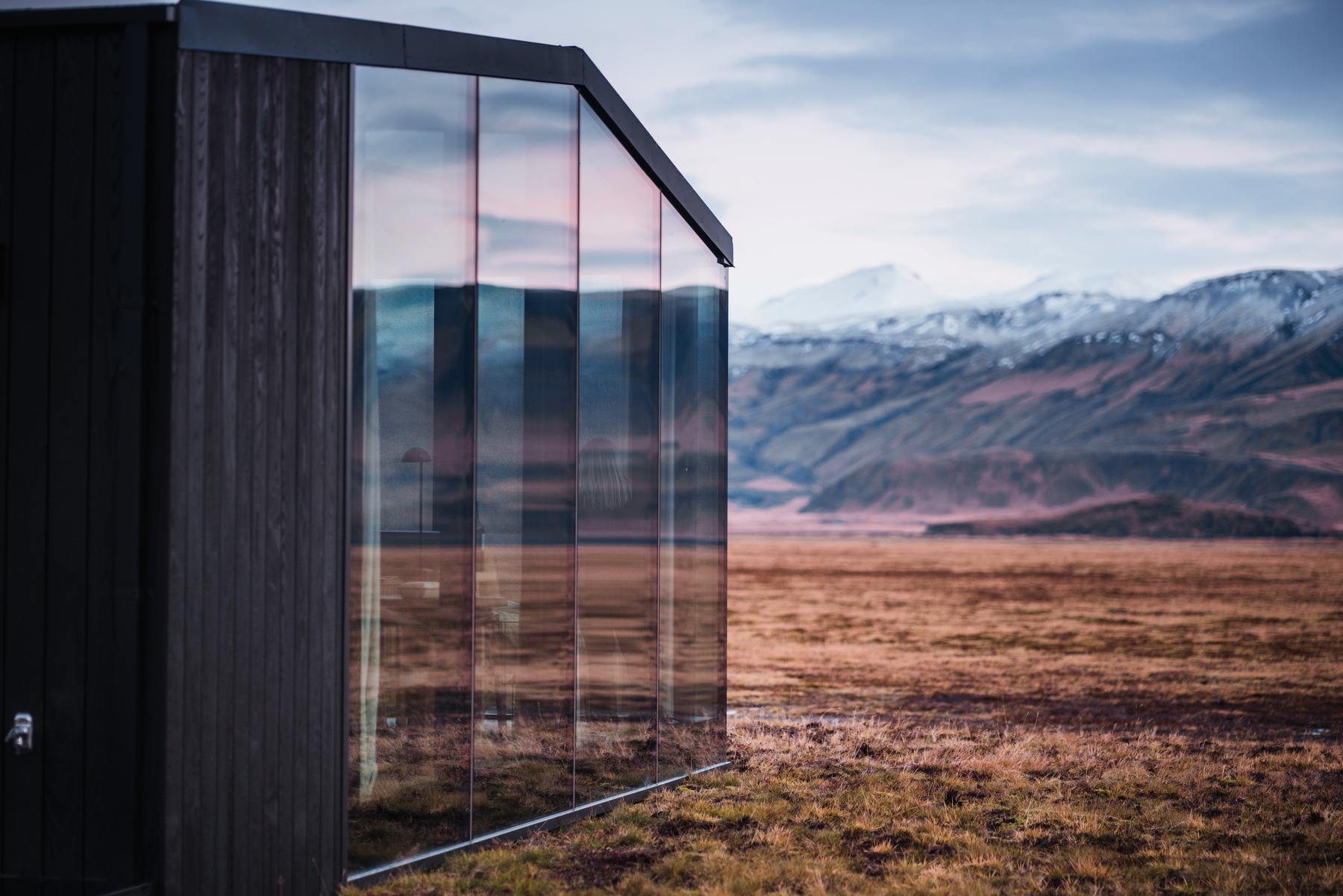
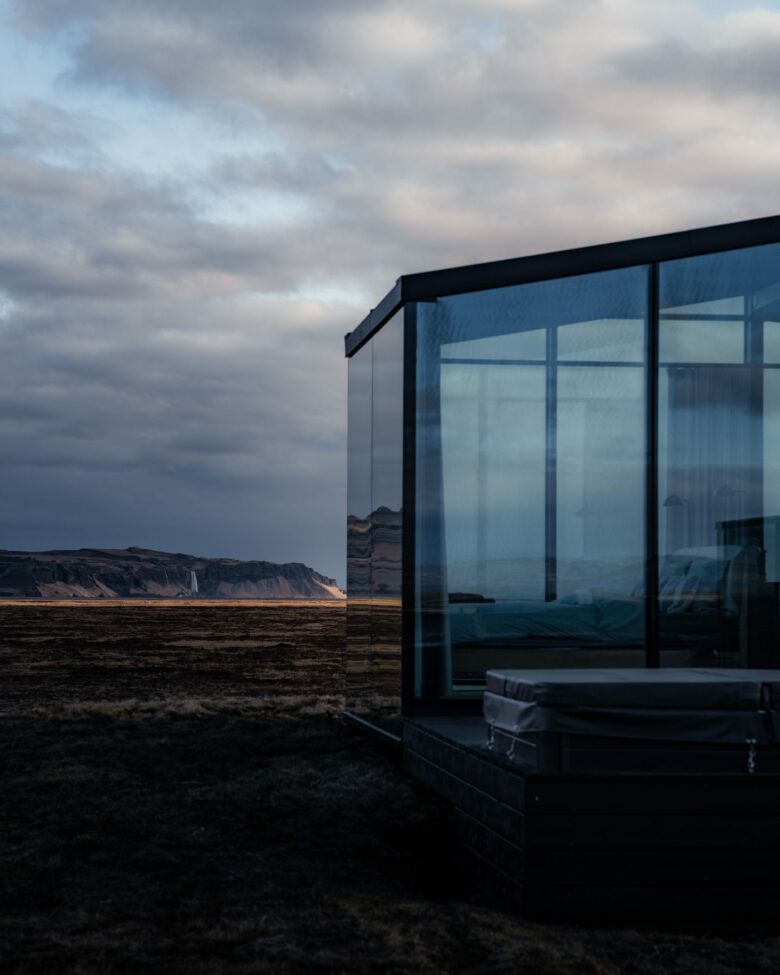
October is the month of contrasts. The moss and grasses around the lodges turn copper, ochre and deep red. Above them, the Eyjafjöll ridge and the Eyjafjallajökull glacier gather their first snow. On a clear morning the whole scene is mirrored in the glass walls of the lodge: autumn below, winter above, and you standing somewhere in between.
It is also the best month for waterfalls. Autumn rain feeds every stream, so Seljalandsfoss, Gljúfrabúi hidden in its narrow canyon, Skógafoss and Kvernufoss are all at their most powerful. The path behind Seljalandsfoss is usually still open in early October; later in the season it can close when ice forms on the rocks, so check on the day.
The days are still long enough for a full loop of the south coast: the curtain of Skógafoss in the morning, the basalt columns of Reynisfjara and the great arch of Dyrhólaey at midday, and back to the lodge in time for the sauna as the light turns pink over the glacier.
Iceland in November: The Season of Long Nights
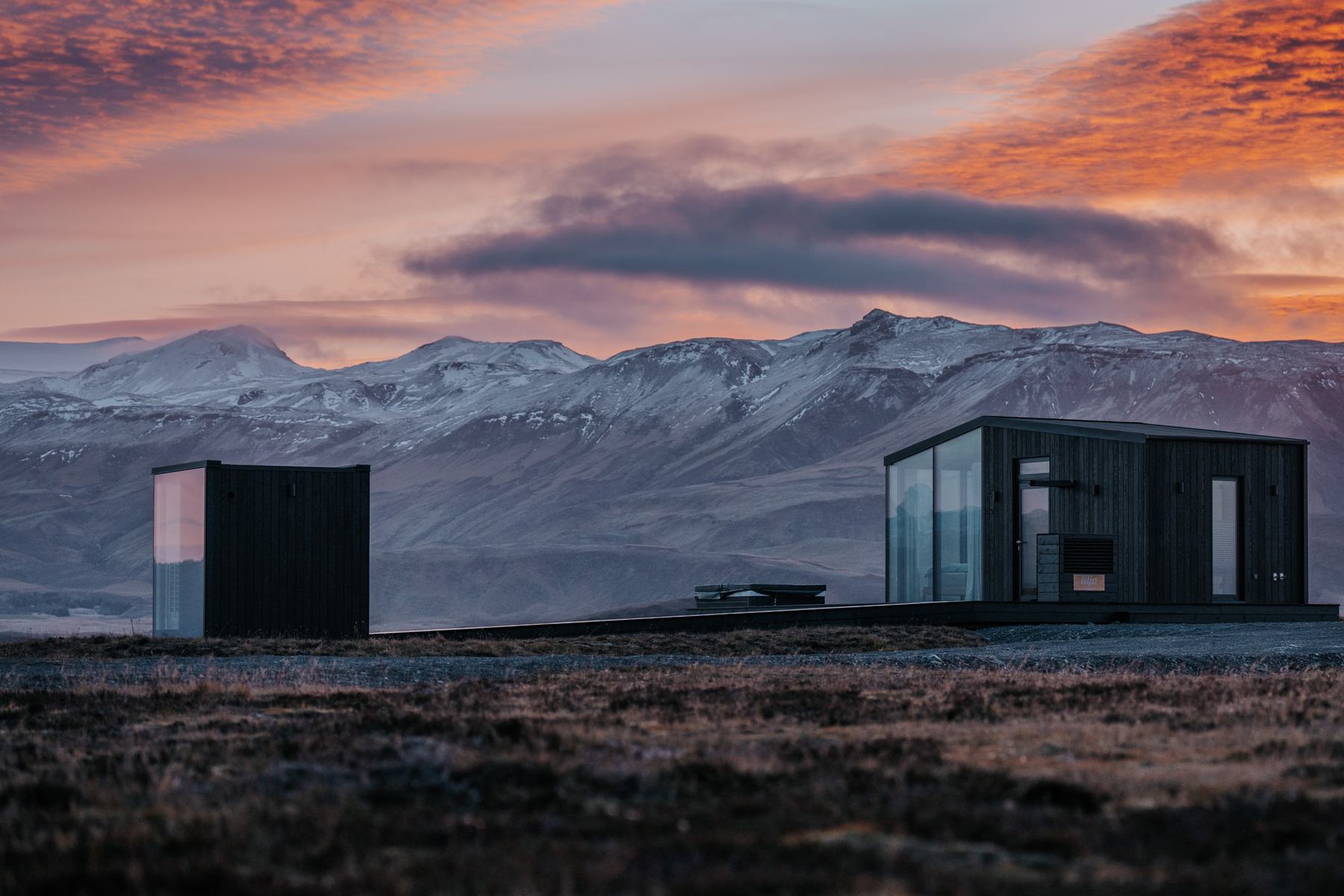
November belongs to the sky. Sunrise comes late, somewhere between nine and eleven, and the sun travels low along the horizon, painting the clouds in colours that look almost invented: salmon, violet, burnt orange. Sunset arrives in the middle of the afternoon and lingers for a long time.
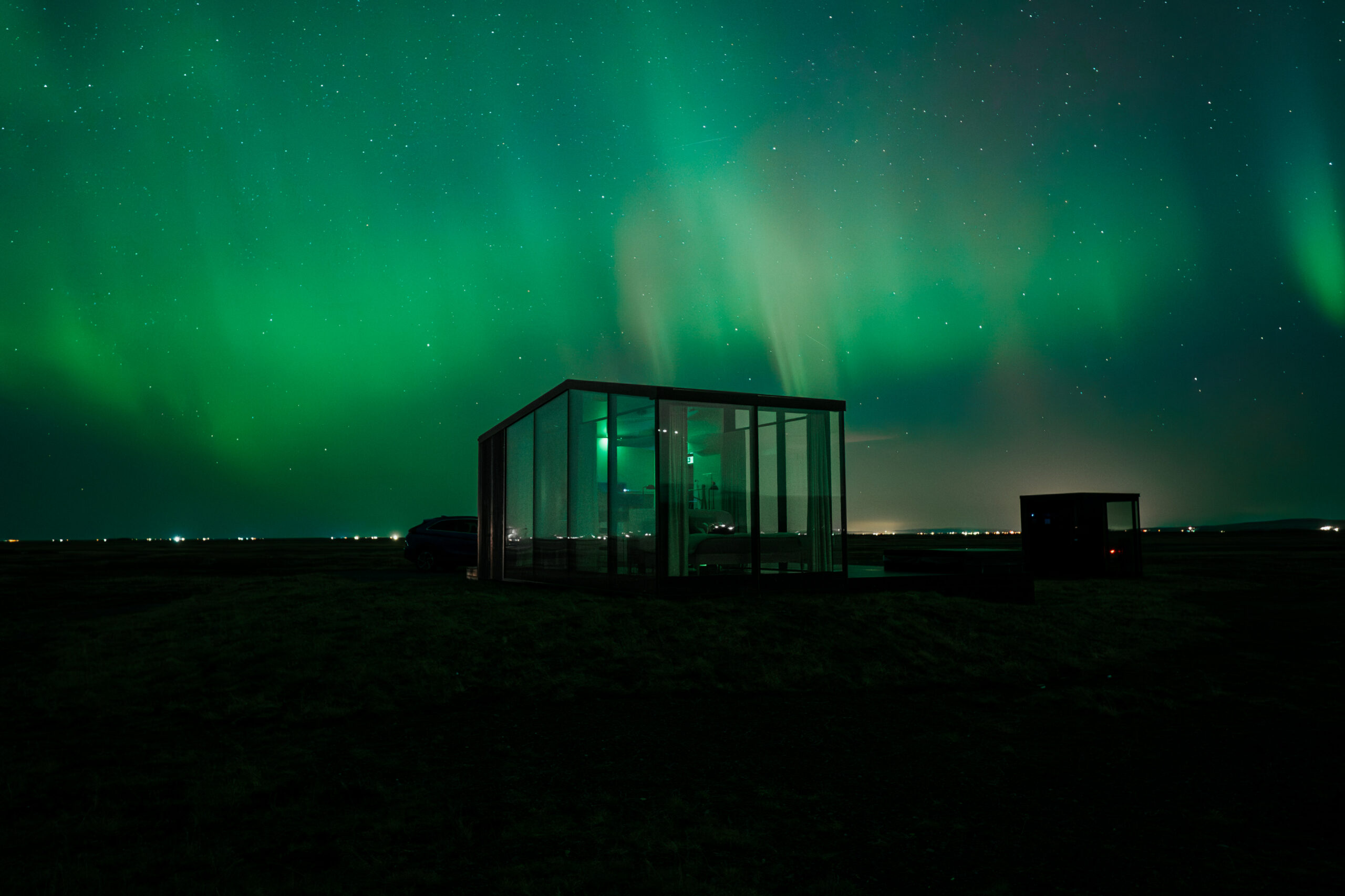
Then night falls early and completely. With long hours of darkness and almost no light pollution around the lodges, November is one of the finest months to watch for the Northern Lights in South Iceland. On a good night the aurora can appear soon after dark and return several times before dawn.
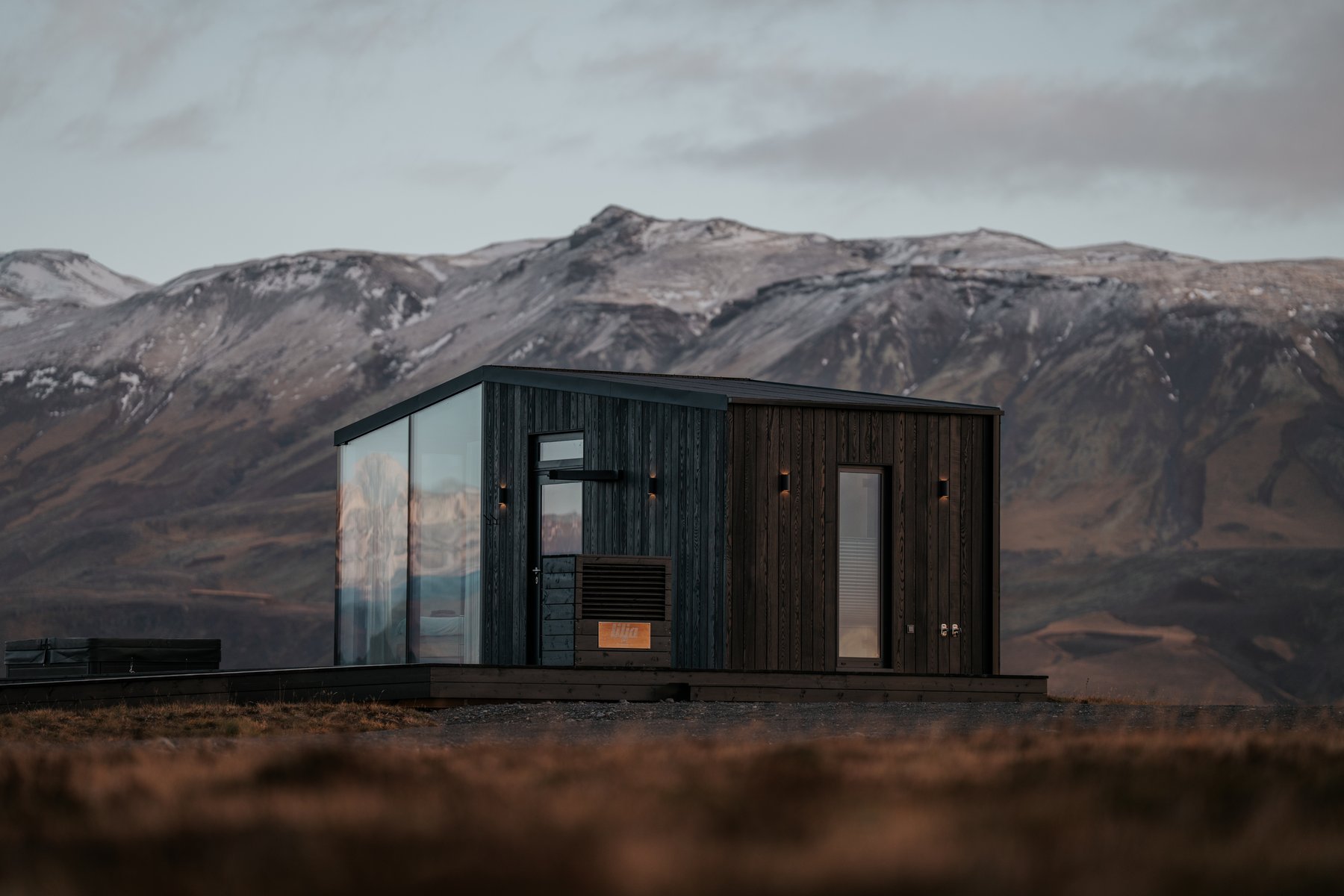
Snow may come, or it may not. That uncertainty is part of the charm. One morning the frost silvers every blade of grass; the next, a fresh white layer covers the tundra and the lodges stand in it like two dark lanterns.
The Quiet Season, Seen from a Glass Lodge
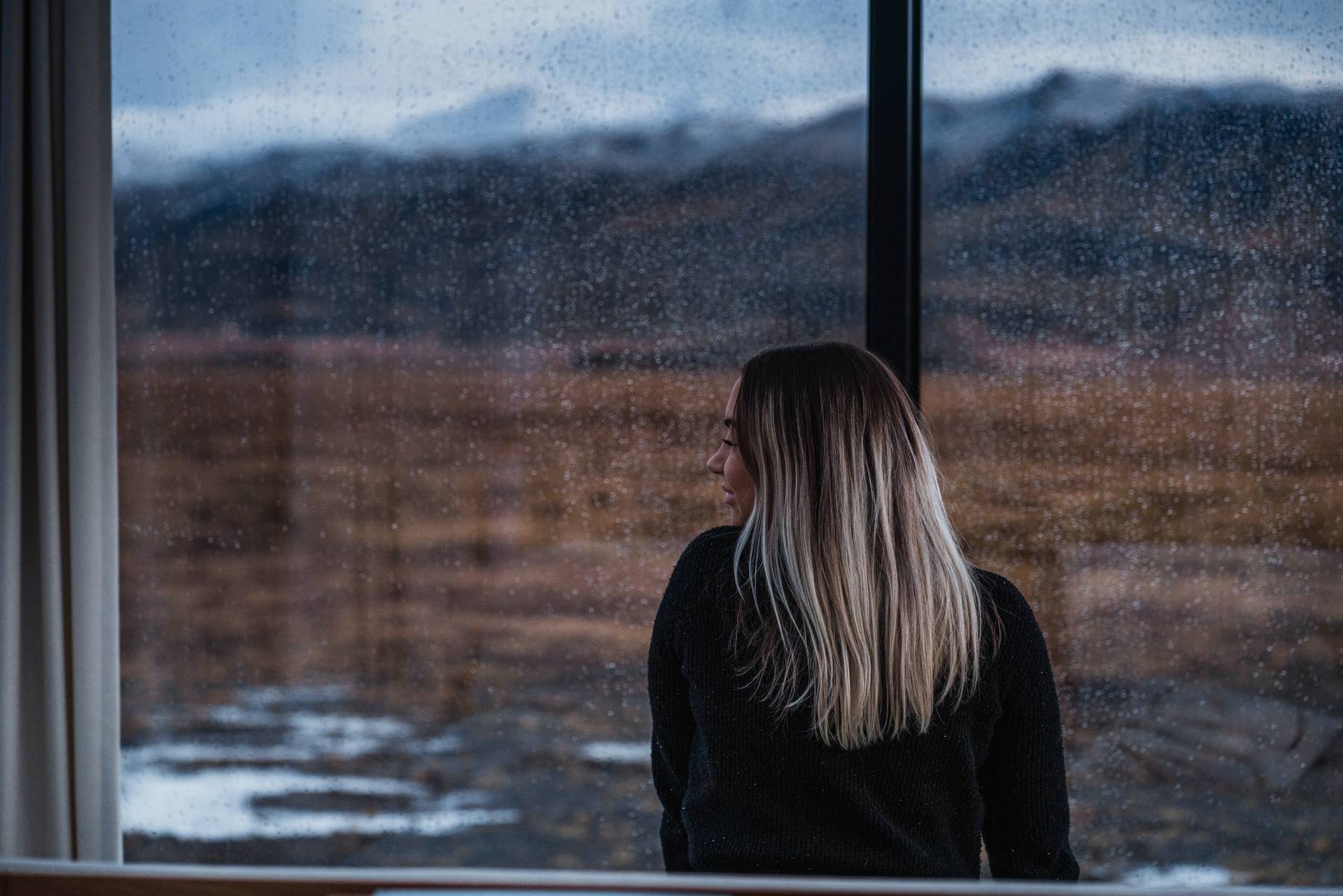
Some journeys are about movement. Autumn at Harmony is about stillness.
A traditional hotel shelters you from the weather. Here, the weather is the view. Rain draws slow lines down the glass while you read. Low clouds slide over the mountains and reveal them again an hour later. A squall passes, and behind it the light returns, sudden and gold, across the entire plain. You follow the day not by the clock but by the sky.
There are only two lodges, The Lilja Lodge and The Georg Lodge, each for two guests: 26 square metres of timber and glass, a waterfall view lodge on one side and glacier view accommodation on the other. No lobby, no corridor, no neighbours on the other side of the wall. In the quiet season, the silence becomes almost physical. It is a unique stay in Iceland precisely because there is so little between you and the land.
A morning coffee in the rain
Half past seven, still dark. The kettle hums. Outside the glass, the first grey light shows rain drifting across the tundra in slow curtains. Seljalandsfoss is out there somewhere, roaring; you cannot see it yet, but you can feel the weight of the water in the air. You wrap both hands around the cup and realise you have not looked at your phone since yesterday. You do not intend to.
Steam, Snow and Silence: The Hot Tub and Sauna in Autumn
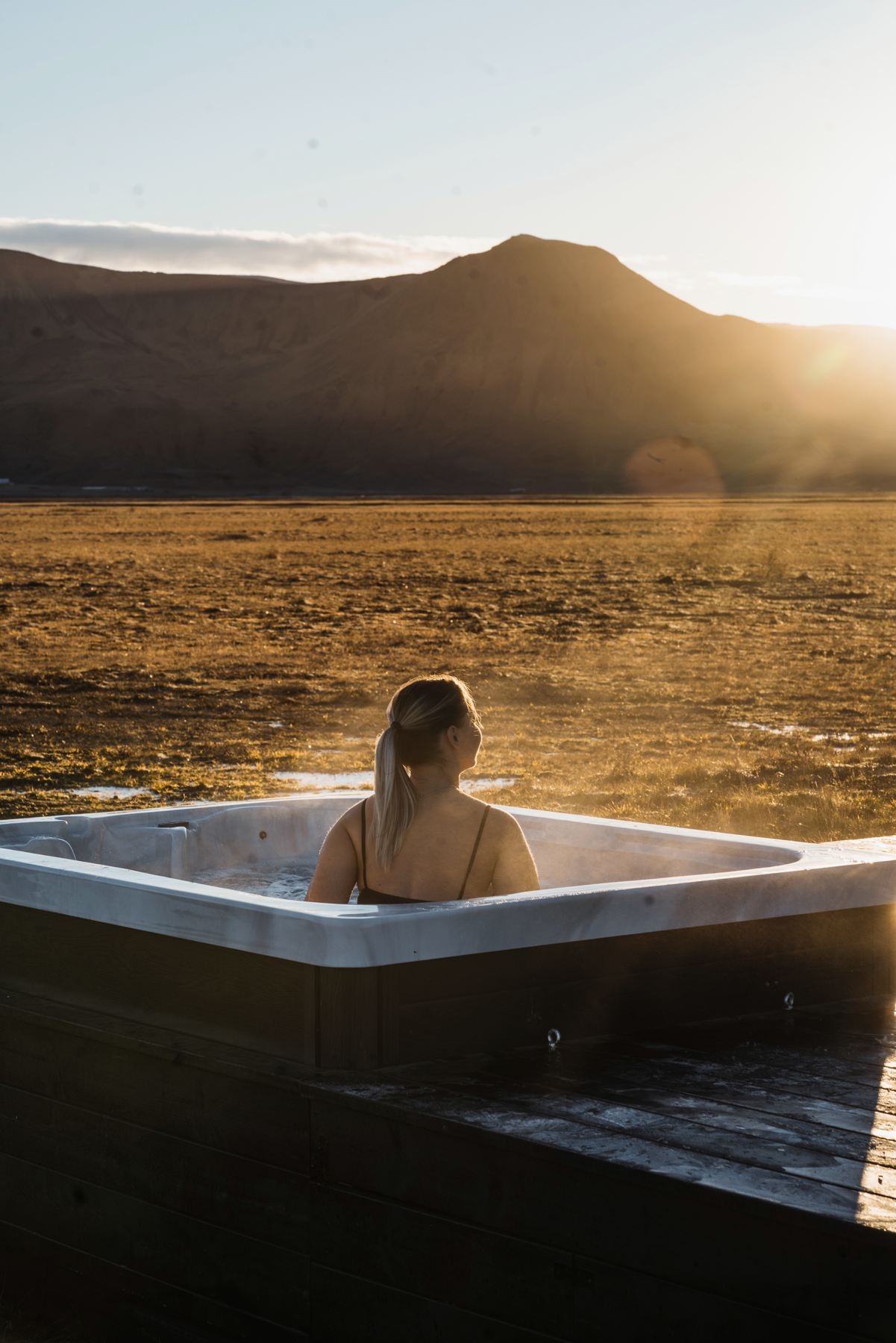
If one ritual belongs to autumn, it is this one. Cold air on your face, hot water up to your shoulders, steam rising into the low sun.
Each lodge has its own private hot tub on the deck and its own glass fronted sauna facing the Eyjafjöll mountains, never shared with anyone. (Read more about the sauna and hot tub ritual.) In October you might sit in the hot tub watching the last light turn the peaks pink. In November you are more likely to sink into it after dark, head tilted back, waiting for the sky to move.
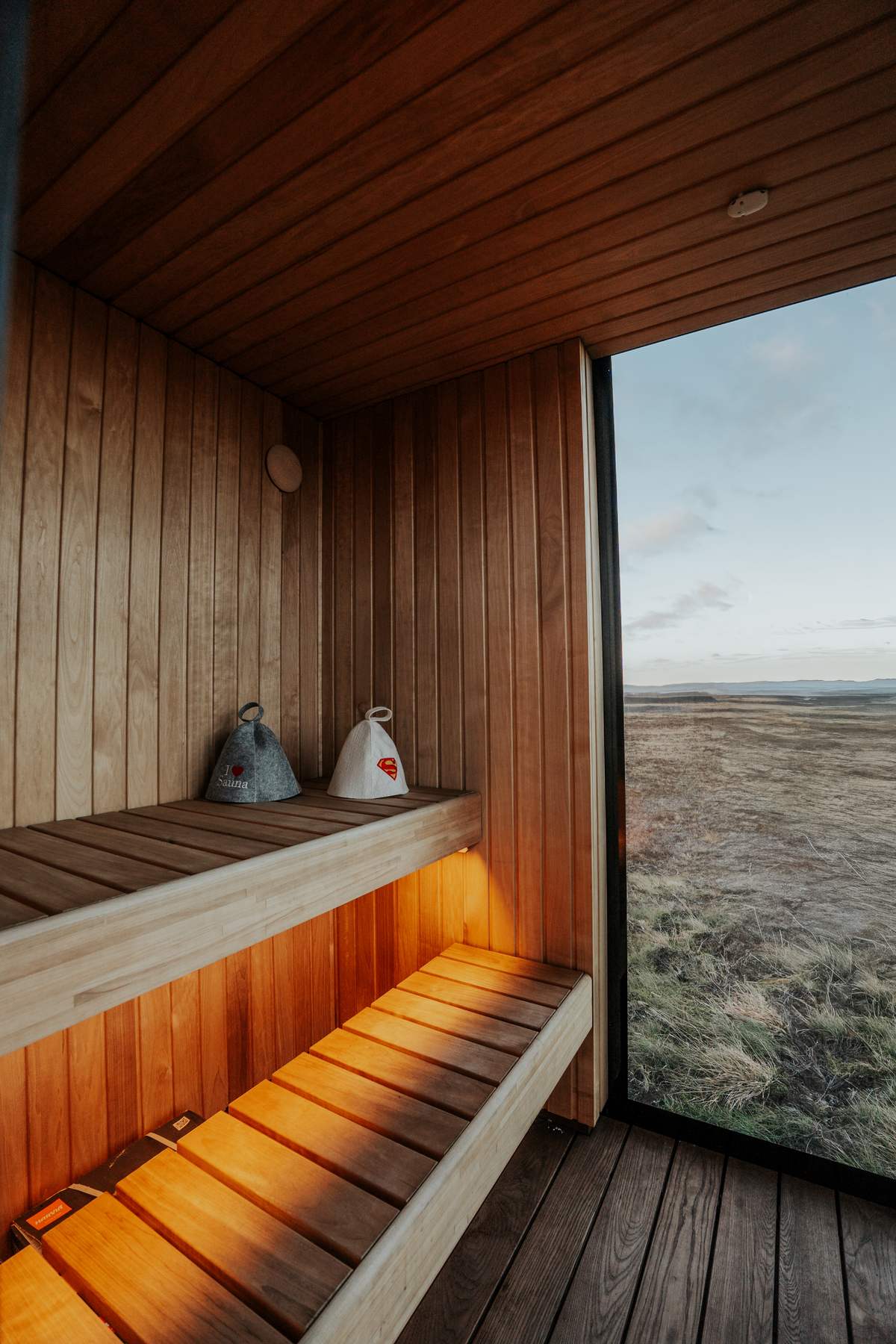
The sauna is at its best when the weather is at its worst. Rain drumming on the roof, wind combing the grass, and inside, dry cedar heat and a wide window onto a landscape that seems to breathe. Then the short walk across the deck, skin steaming in the cold, into the hot tub. Repeat until thinking stops. This is what an Iceland luxury retreat feels like when it is stripped back to its essentials: heat, cold, water, silence.
A Night Under the Aurora
The glass roof above the bed is the reason many guests choose Harmony, and autumn is when it makes the most sense.
Just after eleven, a faint arc appears over the glacier, grey at first, easy to mistake for cloud. Then it takes on colour. Green, then a trace of violet at the edges. It ripples, fades, returns brighter. You lie still under the duvet, looking straight up through the glass, and the only sounds are your own breathing and, very far away, the waterfall.
Nobody can promise the aurora: it needs dark, clear skies and a little solar activity. But here you do not need to chase it through the night in a tour bus. You simply stay in bed and look up. And if the clouds stay closed, the night is still yours. Rain on a glass roof is its own kind of lullaby.
Why Travellers Are Choosing the Quiet Season
Something has changed in the way people travel. The checklist trip, ten sights in three days, is giving way to something slower. More and more travellers look for places that give them back time: fewer people, more space, a landscape they can actually sit with.
Autumn in Iceland answers that wish almost perfectly. Quieter roads, calmer landmarks, long nights that invite early dinners, long conversations and deep sleep. The great sights of the south coast get back their scale and their silence. And for couples, it is the season of closeness: one blanket, one hot tub, one sky above one bed. Where a hotel gives you a room, a luxury cabin in Iceland like this one gives you a waterfall at your window and a glacier on the horizon.
A digital detox that happens on its own
Nobody asks you to switch off. The landscape simply makes it easy. After a day or two, the reflex to check, scroll and share fades by itself, replaced by an older habit: watching the weather. People arrive talking about their plans. They leave talking about a sunset.
Planning Your Autumn Stay at Harmony Seljalandsfoss
Getting there. Harmony sits close to Seljalandsfoss, just off the Ring Road, a little under two hours’ drive from Reykjavík. The road is paved and open all year. In autumn, check road.is and vedur.is before setting off, and from November choose a car with good winter tyres.
How long to stay. Two nights is the minimum to give the aurora a fair chance. Three nights let you add a day on the south coast and a day of doing nothing at all, which is often the best one.
What to pack. Warm layers, a waterproof jacket, walking boots with good grip, a hat and gloves, and a swimsuit for the hot tub. Everything else is already there.
What to save for summer. The highland roads to Landmannalaugar usually close as autumn arrives. Keep the highlands for a summer visit; autumn is the season of the coast, the waterfalls and the sky.
Come for the Silence
In summer, Iceland is generous. In autumn, it becomes intimate.
The light is lower, the nights are longer, the land is quieter, and every moment seems to carry more weight: the first coffee in front of the glass, the steam of the hot tub against a pink sky, the green flicker above the bed at midnight. Few Seljalandsfoss accommodation options let you live all of this without ever leaving your lodge.
Two lodges, two guests each. A waterfall in the distance, a glacier catching its first snow, and nights long enough for the sky to put on its show. If the quiet season is calling you, the lodges are waiting.
Frequently Asked Questions
Yes. October brings fewer crowds, rich autumn colours, powerful waterfalls and around eleven hours of daylight at the start of the month, while the aurora season is already under way.
Yes. Both months fall within the aurora season, which runs from September to April. Long dark nights and very little light pollution around Harmony give good chances on clear nights, although sightings can never be guaranteed.
Usually between about zero and five degrees Celsius, with changeable conditions: rain, wind, clear frosty spells and sometimes the first snow. Warm layers and waterproofs are essential.
Roughly eight hours at the beginning of the month and about five by the end, with long, colourful sunrises and sunsets.
Yes. Seljalandsfoss is just off the Ring Road, which is open all year. Check road.is and vedur.is before driving, and use a car with winter tyres from November.
Usually in October. Later in the season the path can close when ice forms, so check conditions on the day of your visit.
Yes. Each lodge has its own private hot tub and glass fronted sauna, and the contrast between cold air and hot water is exactly what makes them so special in autumn.
At least two nights to give the aurora a real chance, ideally three to combine a south coast day trip with a day of complete rest.